Techniques for Grafting Banana Tree Using Banana Fruit: A Backyard Experiment That Actually Works
A Backyard Gardening Experiment That Surprised Me
Banana plants have this wild tropical energy that instantly makes a backyard feel lush and alive. A few summers ago, I started experimenting with different propagation tricks after seeing gardeners online trying unusual banana grafting methods using actual banana fruit.
Honestly, I didn’t expect much.
But curiosity tends to take over in the garden.
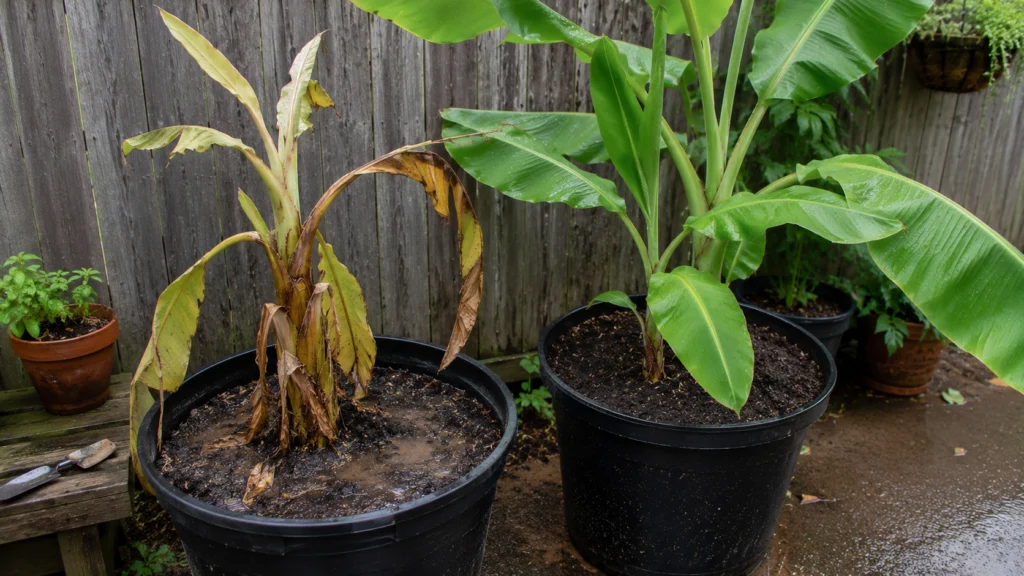
Some attempts failed completely. One turned mushy after three rainy days. Another suddenly pushed out healthy new growth when I almost gave up on it. That’s gardening sometimes — messy hands, trial and error, and tiny victories that feel oddly exciting.
If you’ve been curious about banana tree grafting techniques using banana fruit, this guide walks through the process in a realistic, beginner-friendly way without making it feel overly technical.
Quick Answer
Yes, gardeners sometimes use banana fruit during grafting or propagation experiments to encourage moisture retention and nutrient transfer around young banana shoots. While traditional banana propagation usually happens through suckers or corm division, this creative backyard technique can help support rooting when done carefully in warm, humid conditions.
Table of Contents
- What Is Banana Tree Grafting?
- Can You Really Use Banana Fruit for Grafting?
- Best Time to Try Banana Grafting
- Tools and Materials You’ll Need
- Step-by-Step Banana Fruit Grafting Technique
- Common Mistakes That Ruin Banana Grafts
- How Long Until You See Results?
- Sophia’s Backyard Notes
- FAQ
- About Sophia
What Is Banana Tree Grafting?
Banana plants technically aren’t trees at all. They’re giant herbaceous plants with thick stalk-like stems called pseudostems.
Traditional grafting isn’t very common with bananas the way it is with fruit trees. Most banana growers propagate plants through pups or underground corm divisions.
Still, backyard gardeners love experimenting.
The “banana fruit grafting” method is more of a propagation support technique than true scientific grafting. The banana fruit acts almost like a natural moisture pouch around developing plant tissue.
And surprisingly, in warm climates, it can sometimes help young shoots establish faster.
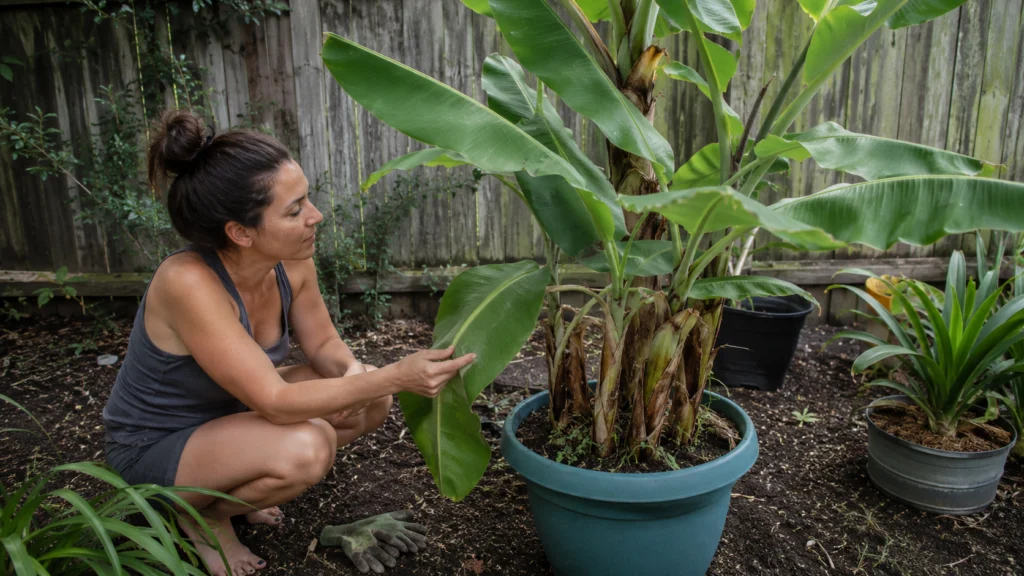
I tried it near the side fence where the afternoon sun stays soft and humid. That spot seems to help tropical plants settle in without stress.
Can You Really Use Banana Fruit for Grafting?
This is where things get interesting.
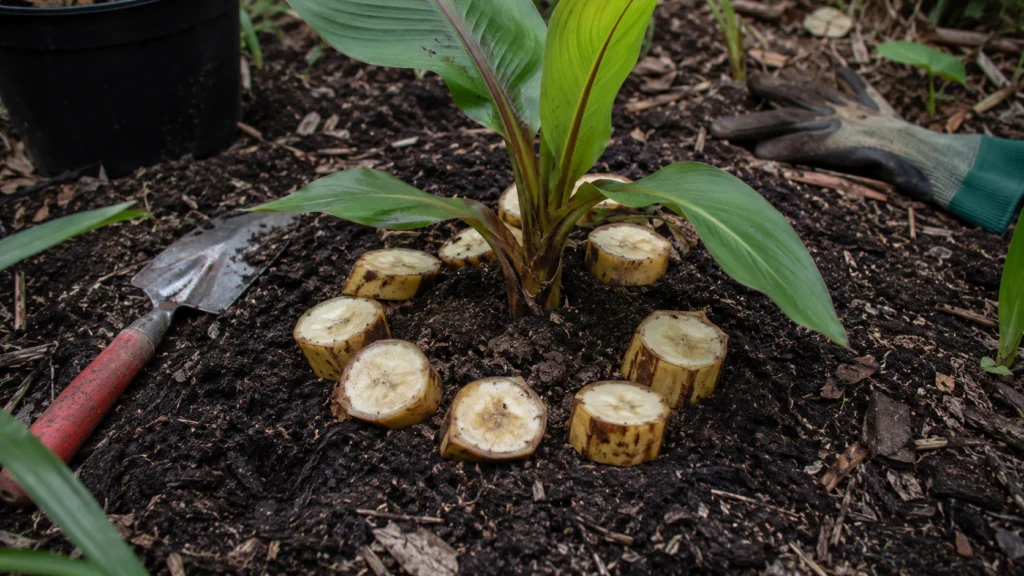
Some gardeners slice open ripe banana fruit and place sections around graft points or young shoots because bananas naturally hold moisture, potassium, and soft organic material.
Does it work every single time?
No.
But gardening experiments rarely do.
The key seems to be warmth, humidity, and keeping the area from rotting. Overly wet conditions can quickly turn the banana pulp into a moldy mess.
I noticed firmer bananas worked better than overly ripe ones. The soft, sugary fruit attracted ants almost immediately in midsummer.
A slightly underripe banana held together longer and stayed cleaner around the base.
Best Time to Try Banana Grafting
Warm weather matters more than almost anything else here.
Late spring through mid-summer tends to give the best results because banana plants actively grow during heat and humidity.
Cool temperatures slow everything down.
If nighttime temperatures drop below 60°F regularly, the graft area may struggle or rot before new growth starts.
For most American gardeners, ideal timing looks like:
Southern States
April through August
Mild Coastal Areas
Late May through early September
Cooler Northern Zones
Container-grown bananas work best indoors or in greenhouses
One thing I learned the hard way — avoid attempting this during long rainy stretches. Too much moisture around banana fruit creates fungal problems fast.
Tools and Materials You’ll Need
You really don’t need fancy equipment for this.
A few backyard basics work perfectly.
Supplies
- Healthy banana pup or young shoot
- Fresh banana fruit
- Sharp gardening knife
- Gardening tape or soft plant ties
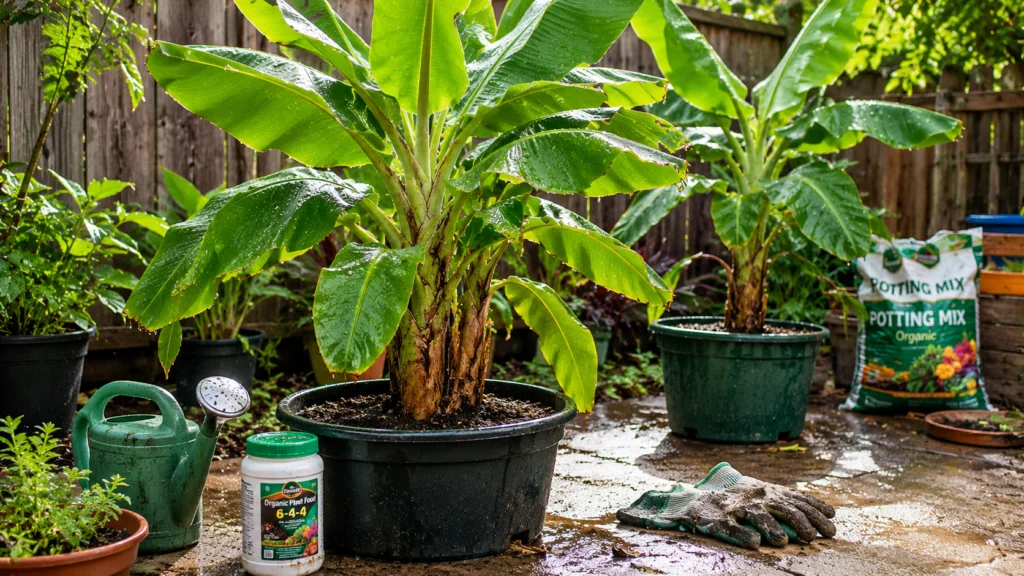
- Potting soil with good drainage
- Gloves
- Small container or garden bed
I prefer using large patio containers first before moving banana plants into the ground later.
Containers make it easier to control moisture while you’re experimenting.
Step-by-Step Banana Fruit Grafting Technique
Step 1: Choose a Healthy Banana Pup
Pick a young offshoot with firm green growth and healthy roots.
Avoid weak yellow shoots.
Healthy energy matters here.
Step 2: Prepare the Banana Fruit
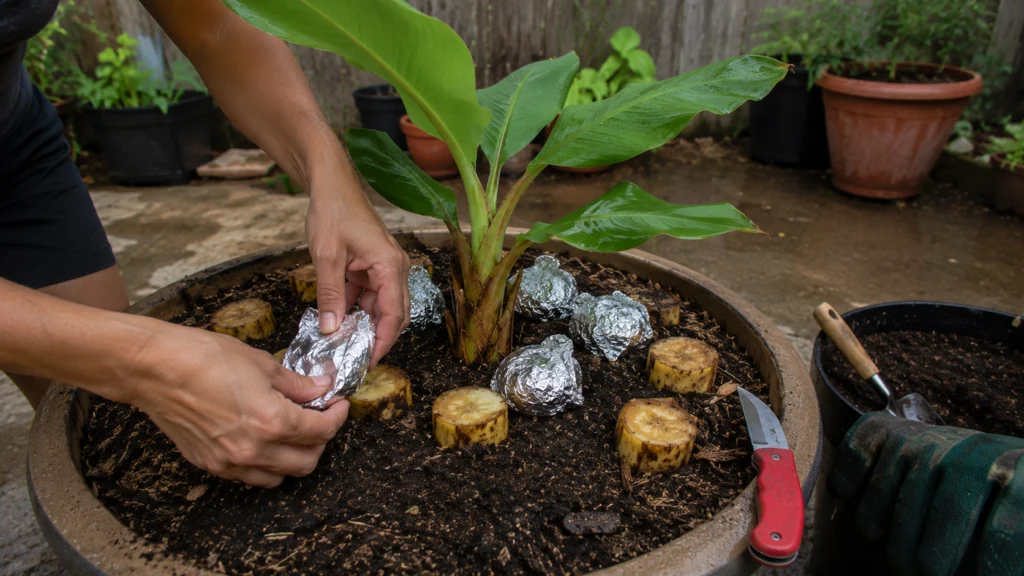
Slice the banana lengthwise into thick sections.
Don’t mash it completely.
You want soft moisture, not banana soup.
Step 3: Place the Banana Around the Root Zone
Some gardeners wrap banana slices around the lower stem or near shallow roots before lightly covering with soil.
This creates a humid organic layer around the plant.
Step 4: Secure and Stabilize
Use loose garden ties if needed.
Keep the plant upright and protected from strong wind.
Step 5: Monitor Carefully
This part matters most.
Check daily for:
- mold
- fungus
- insects
- excess moisture
If the banana fruit turns black and slimy quickly, remove it immediately and refresh the soil surface.
Common Mistakes That Ruin Banana Grafts
Overwatering
This is probably the biggest problem.
Banana fruit already holds moisture. Adding heavy watering on top of that creates rot very quickly.
Using Rotten Fruit
Too-ripe bananas attract pests fast.
Use fresh, firm fruit instead.
Poor Drainage
Dense clay soil can suffocate young roots.
Bananas love moisture, but they still need airflow underground.
Too Much Sun Immediately
Freshly worked plants stress easily.
Filtered afternoon light works better during recovery.
One of my plants recovered beautifully after I moved it beside the patio umbrella for a week.
Sometimes small adjustments change everything.
How Long Until You See Results?
Bananas aren’t patient plants when conditions are right.
You may notice:
- fresh leaf growth within 2–4 weeks
- stronger root establishment in warm weather
- visible recovery after transplant stress
But every backyard is different.
Humidity, soil warmth, sunlight, and watering habits all change the outcome.
One summer mine barely grew for weeks, then suddenly pushed out two giant leaves after a humid heatwave rolled through.
Gardens love surprising us like that.
Sophia’s Backyard Notes
I think part of the appeal of banana gardening is how dramatic the plants feel even in ordinary suburban spaces.
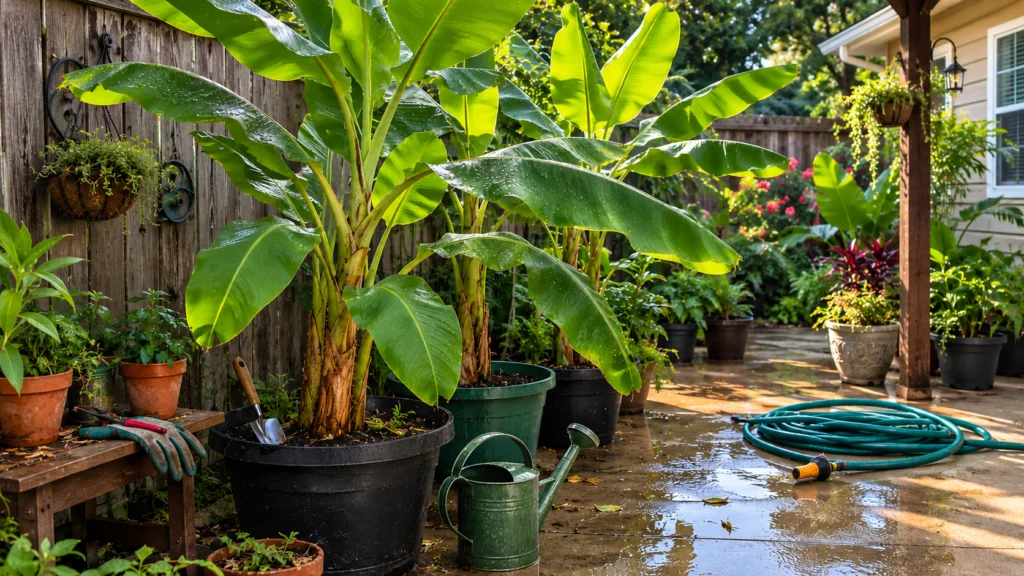
A single healthy banana plant can make a small patio corner feel tropical without trying too hard.
The banana fruit grafting experiment isn’t perfect science, but it’s fun, creative, and genuinely interesting for gardeners who enjoy testing unusual propagation ideas.
And honestly, those are usually the most memorable garden projects anyway.
The slightly chaotic ones.
The ones that make your neighbors lean over the fence and ask what you’re doing this time.
FAQ
Does banana tree grafting really work?
Traditional grafting is uncommon with bananas, but propagation experiments using banana fruit can support moisture retention around young shoots.
Can I grow bananas in containers?
Yes. Large containers work very well for backyard banana gardening, especially in cooler climates.
What type of banana works best?
Firm, fresh bananas seem to perform better than overly ripe fruit during propagation experiments.
How often should I water?
Keep soil lightly moist but never soggy. Overwatering causes rot quickly.
Can this method work indoors?
It can, but warm temperatures and humidity are very important for success.
About Sophia
Sophia is the gardener behind Sophia Grows, a lifestyle gardening blog inspired by slow backyard mornings, seasonal planting projects, cozy patios, and practical outdoor living ideas for real homes.
She loves container gardening, tropical plants, old terracotta pots, and experimenting with unusual propagation techniques that may or may not completely work the first time.