The Secret to Growing Squash in a Plastic Can With Milk and Eggs for Bigger, Longer Harvests
Squash has always been one of those vegetables that makes a garden feel generous.
One day the vines look small and sleepy, and suddenly you’re walking outside with coffee in hand and spotting giant leaves, yellow blooms, and squash hiding underneath like little surprises.
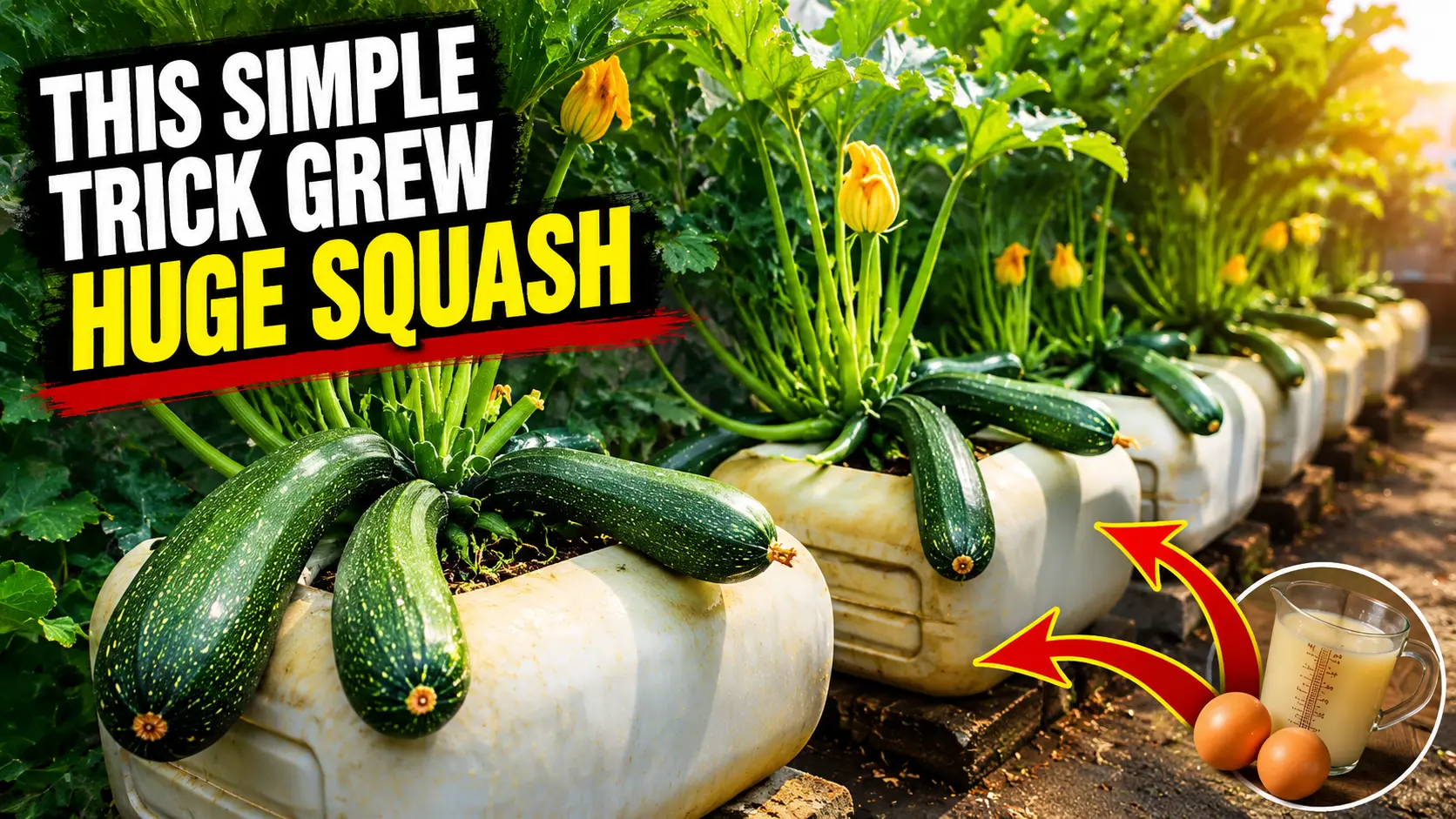
A few summers ago, I tried growing squash in an old plastic can near the back fence because I had completely run out of raised bed space. I honestly didn’t expect much from it.
But after adding crushed eggshells and diluted milk to the soil, the plant exploded with growth.
The fruits grew long, glossy, and surprisingly heavy. Neighbors started asking what variety I planted, but the truth was simpler than that — healthy soil and steady feeding made all the difference.
If you have a sunny backyard corner, a large plastic container, and a couple kitchen leftovers, this method is worth trying.
Quick Answer
Growing squash in a plastic can works beautifully when the container is large enough and the soil stays nutrient-rich. Adding crushed eggshells provides calcium, while diluted milk helps support healthy growth and stronger fruit production. Combined with warm sun, steady watering, and good airflow, squash plants can produce many large, long fruits even in small backyard spaces.
Table of Contents
- Why Squash Grows Surprisingly Well in Plastic Containers
- Why Gardeners Add Milk and Eggs to Squash Soil
- Choosing the Right Plastic Can
- The Best Soil Mix for Container Squash
- How I Plant Squash in Containers
- Watering Tricks That Keep Fruits Growing
- Common Problems and Easy Fixes
- Harvesting Squash Before It Gets Tough
- FAQ
Why Squash Grows Surprisingly Well in Plastic Containers
Squash plants look dramatic once they take off, but their roots actually adapt well to deep containers.
The key is space.
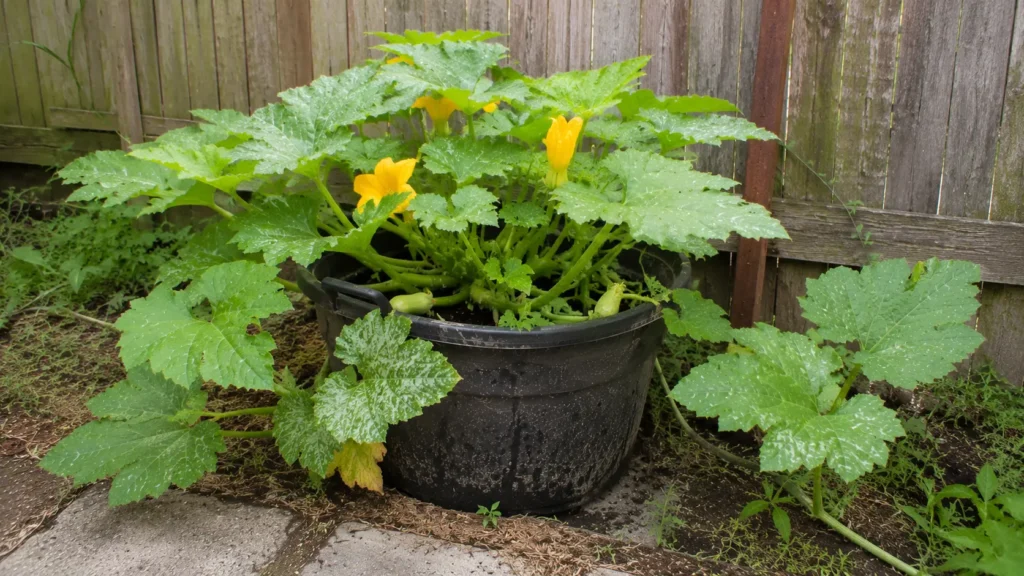
A tiny pot won’t work for long. But a large plastic can — especially those sturdy storage bins or recycled garden containers — holds warmth beautifully during summer.
I’ve noticed the soil in containers warms faster than my raised beds in early June. Squash absolutely loves that.
Another thing I like is control.
Container-grown squash feels easier to manage:
- fewer weeds
- less sprawling chaos
- easier watering
- cleaner fruits
And honestly, the slightly messy backyard look of one huge squash vine spilling over a plastic container feels very cottage-garden in the best way.
Why Gardeners Add Milk and Eggs to Squash Soil
This sounds strange the first time you hear it.
But old-school gardeners have been using kitchen scraps forever.
Eggshells for Calcium
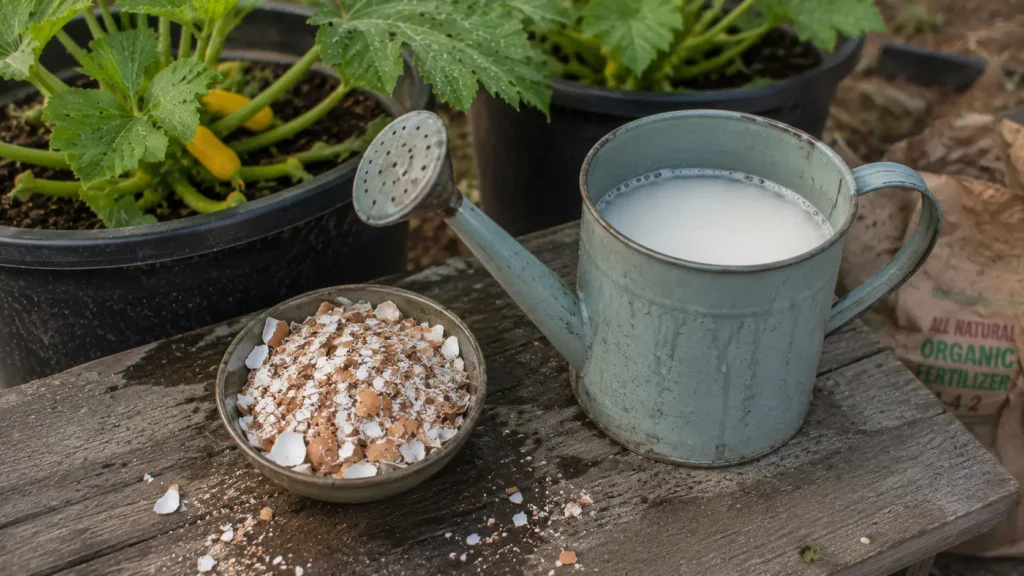
Crushed eggshells slowly release calcium into the soil.
Squash plants need calcium for healthy fruit development, especially during hot weather when growth happens fast.
I usually rinse the shells, let them dry on a paper towel near the kitchen window, then crush them by hand before mixing them into the soil.
Nothing fancy.
Milk for Soil Health
I dilute milk heavily with water — usually about one part milk to five parts water.
Used occasionally, it can help support microbial activity in the soil and give plants a gentle nutrient boost.
I don’t pour it directly onto leaves during intense sun because sour milk smell in July heat is not pleasant. Learned that the hard way.
Instead, I water the soil lightly around the base.
Choosing the Right Plastic Can
This part matters more than people think.
Squash roots get big fast.
I like using:
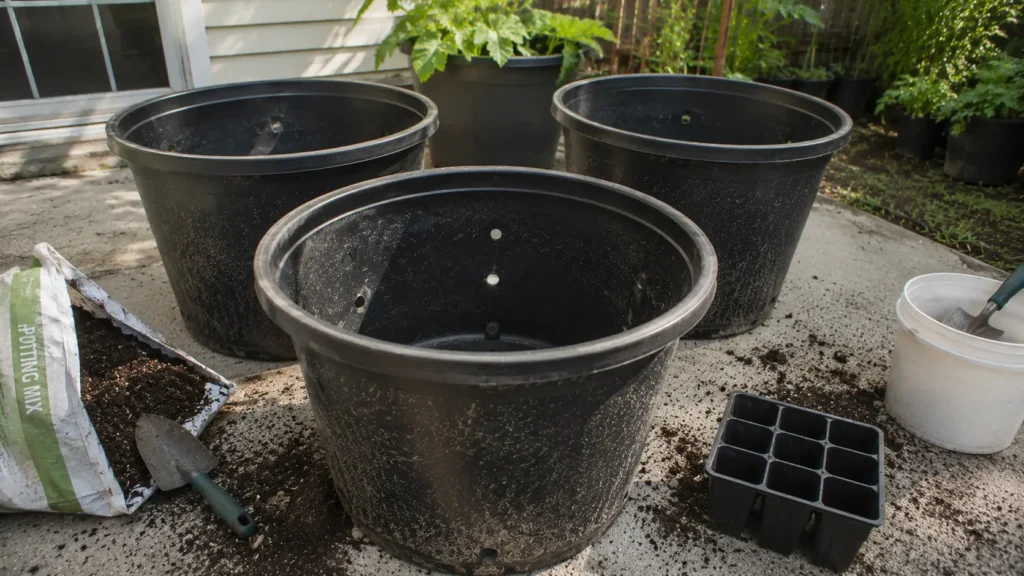
- 15–25 gallon plastic cans
- sturdy storage totes
- large recycled nursery containers
Drainage holes are non-negotiable.
I drill several holes at the bottom and add a thin layer of small branches or bark before filling with soil.
Dark-colored containers warm up faster, which helps early growth, though they may dry out quicker during heat waves.
One summer I used a flimsy dollar-store bin and the side literally cracked open by August from the root pressure and heat.
So now I go for sturdy containers only.
The Best Soil Mix for Container Squash
Squash is hungry.
Very hungry.
Container soil needs to stay rich while still draining well.
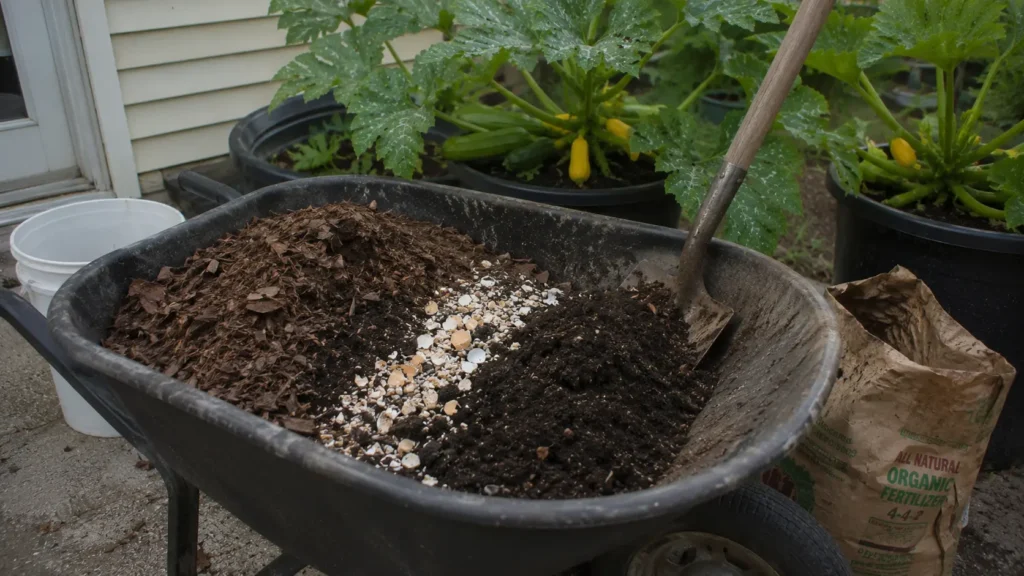
I usually mix:
- quality compost
- garden soil
- coconut coir or peat moss
- a little aged manure
- crushed eggshells
The texture should feel loose and fluffy, not compacted.
If the soil becomes hard after watering, roots struggle and fruit production slows down.
I also mulch heavily around the base once the plant matures.
Straw, dry grass clippings, or shredded leaves help hold moisture during peak summer heat.
How I Plant Squash in Containers
I usually direct sow seeds once nights stay warm.
Squash hates cold soil.
I plant two seeds near the center and thin to the strongest seedling later.
Once the plant starts growing, it moves fast.
Like alarmingly fast.
The leaves become huge almost overnight, and suddenly the container disappears underneath the vine.
One thing I always do now is leave enough space around the container for airflow.
Crowded squash plants invite powdery mildew by midsummer.
And trust me, once those giant leaves trap humidity, things get messy quickly.
My Favorite Container Varieties
Some squash varieties naturally perform better in containers:
- Bush zucchini
- Eight Ball squash
- Patio Star zucchini
- Yellow crookneck squash
Bush types stay more manageable in smaller backyard gardens.
Watering Tricks That Keep Fruits Growing
This is where many squash plants fail.
Inconsistent watering causes:
- bitter squash
- blossom end rot
- stunted fruits
- fewer harvests
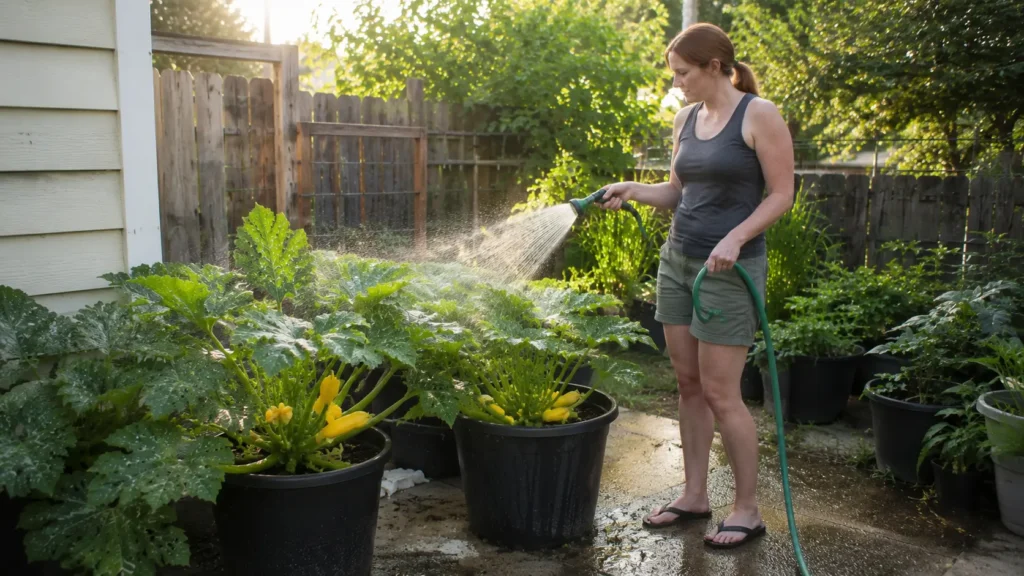
Container squash dries out quickly during hot American summers.
In July, I sometimes water twice a day during heat waves.
The goal is deep watering, not constant shallow sprinkles.
I water near the base early in the morning and try to keep the leaves dry.
Once fruits begin forming, steady moisture makes a huge difference in size and shape.
You can almost see the squash getting longer day by day after a good watering cycle.
Common Problems and Easy Fixes
Powdery Mildew
Usually caused by poor airflow and wet leaves.
Remove crowded leaves and water at soil level.
Tiny Fruits Falling Off
This often means poor pollination.
Planting flowers nearby helps attract bees naturally.
Yellow Leaves
Sometimes it’s normal aging.
But sudden yellowing may mean nutrient deficiency or inconsistent watering.
I feed container squash lightly every couple of weeks once fruiting starts.
Nothing aggressive.
Too much fertilizer creates giant leaves with very little squash.
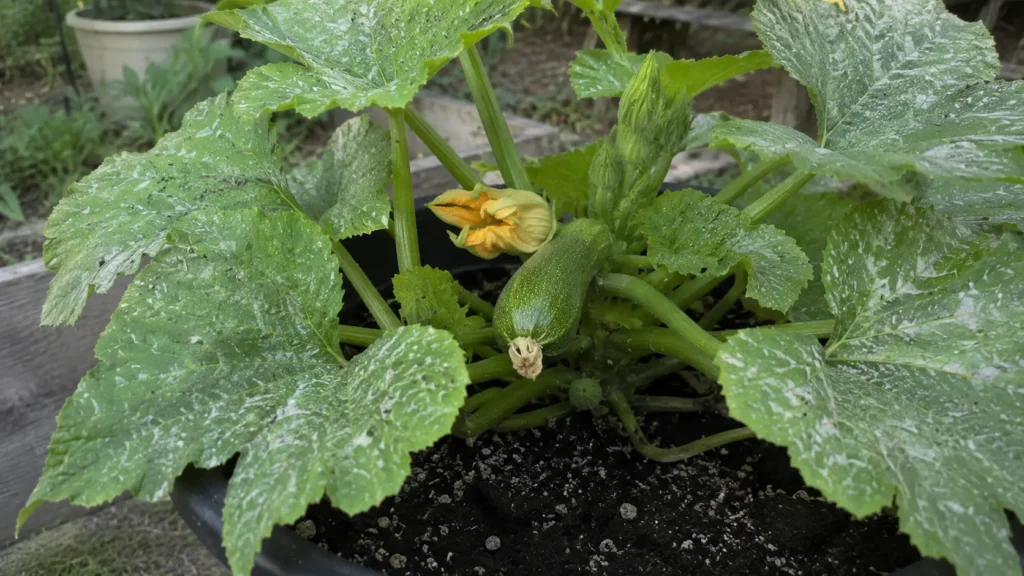
Harvesting Squash Before It Gets Tough
This is the hardest part for me because squash grows ridiculously fast.
You check one evening and the fruit looks perfect.
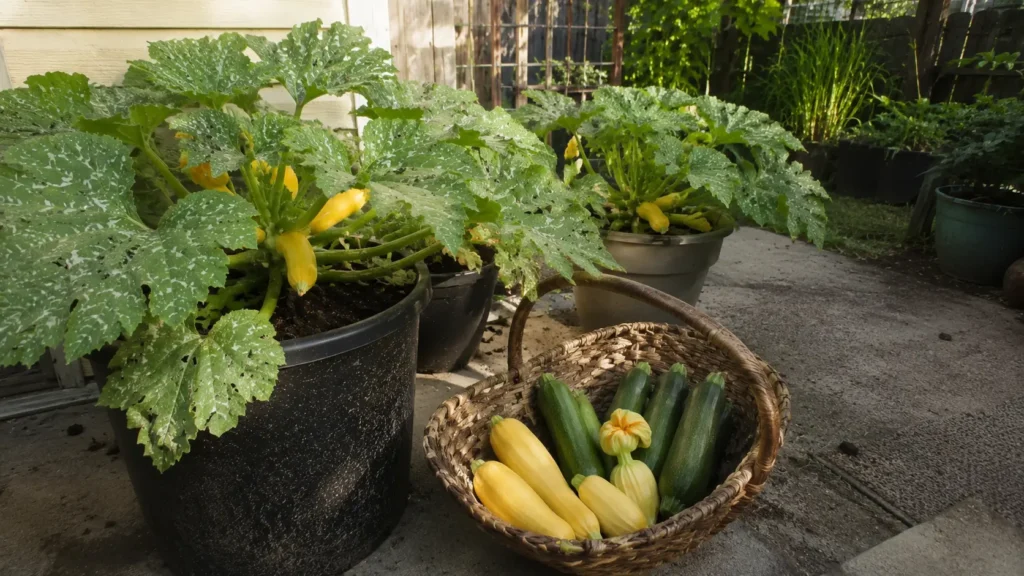
You check again two days later and suddenly it’s baseball bat sized.
For tender texture and better flavor, I harvest early.
Smaller squash also encourages the plant to keep producing more fruits.
And honestly, carrying a basket full of fresh squash from the backyard still feels deeply satisfying every single summer.
FAQ
Can squash really grow well in a plastic container?
Yes. As long as the container is large enough and has proper drainage, squash can grow extremely well in containers.
Does milk help squash plants grow?
Diluted milk can provide minor nutrients and may support healthy soil biology when used occasionally.
Should eggshells be crushed before adding them?
Yes. Crushed shells break down faster and release calcium more effectively into the soil.
How much sun does container squash need?
At least 6–8 hours of direct sunlight daily for strong growth and fruit production.
Which squash variety is best for small spaces?
Bush zucchini and compact patio varieties are usually the easiest choices for containers.