How to Grow Onions and Garlic in a Styrofoam Box for Beginners
A couple of springs ago, I started experimenting with random containers in my backyard garden. Old buckets, cracked planters, wooden crates that had definitely seen better days.
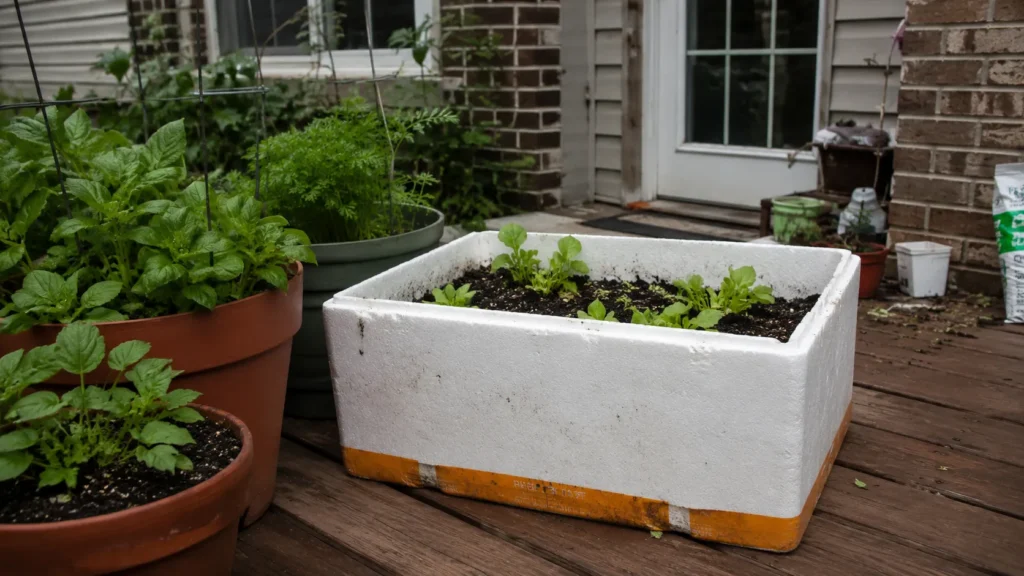
One afternoon, I noticed a white Styrofoam box sitting beside a local seafood market dumpster. It looked clean enough, so I brought it home mostly out of curiosity.
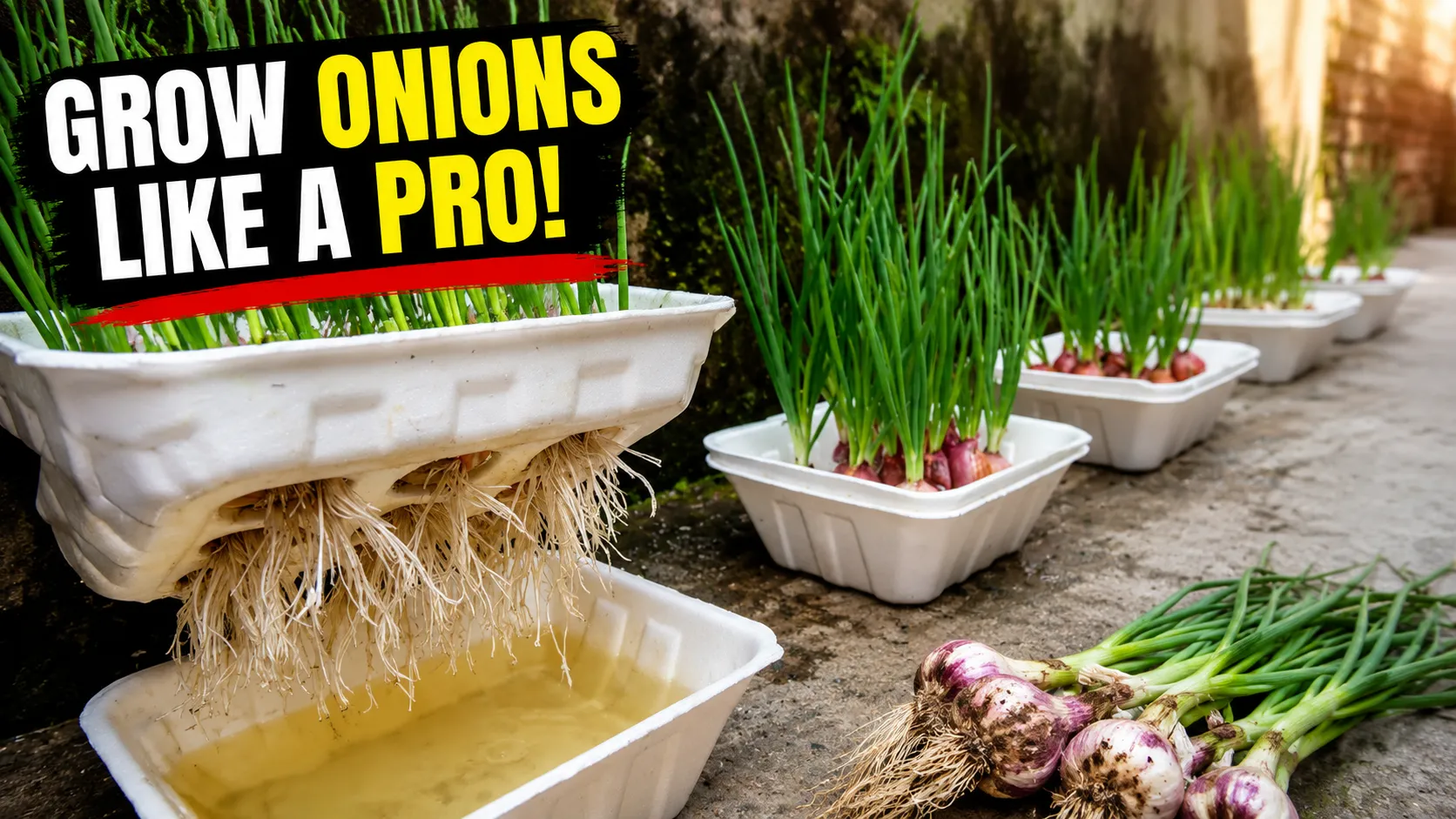
I planted a few onion sets in one side, garlic cloves in the other, and honestly forgot about them for a while.
A few weeks later, soft green shoots started popping up everywhere. Healthy, happy, surprisingly strong little plants.
Since then, growing onions and garlic in Styrofoam boxes has become one of my favorite low-effort garden projects. It’s affordable, beginner-friendly, and perfect for patios, balconies, or small backyard corners that need a little life.
If you’re just starting your gardening journey, this is one of the easiest places to begin.
Quick Answer
Yes, you can successfully grow onions and garlic in a Styrofoam box.
Styrofoam containers hold moisture well, protect roots from temperature swings, and work beautifully for small-space gardening. Add drainage holes, quality potting soil, sunlight, and consistent watering, and you’re off to a great start.
Table of Contents
- Why Styrofoam Boxes Actually Work
- What You’ll Need
- How to Prepare the Box
- Planting Onions Step by Step
- How to Grow Garlic in Containers
- Common Beginner Mistakes
- Simple Tips for a Better Harvest
- Harvesting and Storing Garlic and Onions
- FAQ
- About Sophia
Why Styrofoam Boxes Actually Work
At first, I thought Styrofoam boxes would look a little awkward in the garden.
But they turned out to be surprisingly practical.
They keep soil warmer during chilly spring nights and prevent containers from drying out too quickly during warmer days. Garlic and onions both seem to appreciate the stable environment.
They’re lightweight too, which makes it easy to move them around the yard depending on sunlight or weather.
And honestly? I kind of like the imperfect backyard-garden feel they bring. Not everything needs to look polished to grow beautifully.
Sophia’s Personal Note
I usually tuck my Styrofoam planters beside terracotta pots and herbs so they blend naturally into the garden. After a while, they stop standing out completely.
What You’ll Need
One of the reasons I recommend this project for beginners is because you barely need anything fancy.
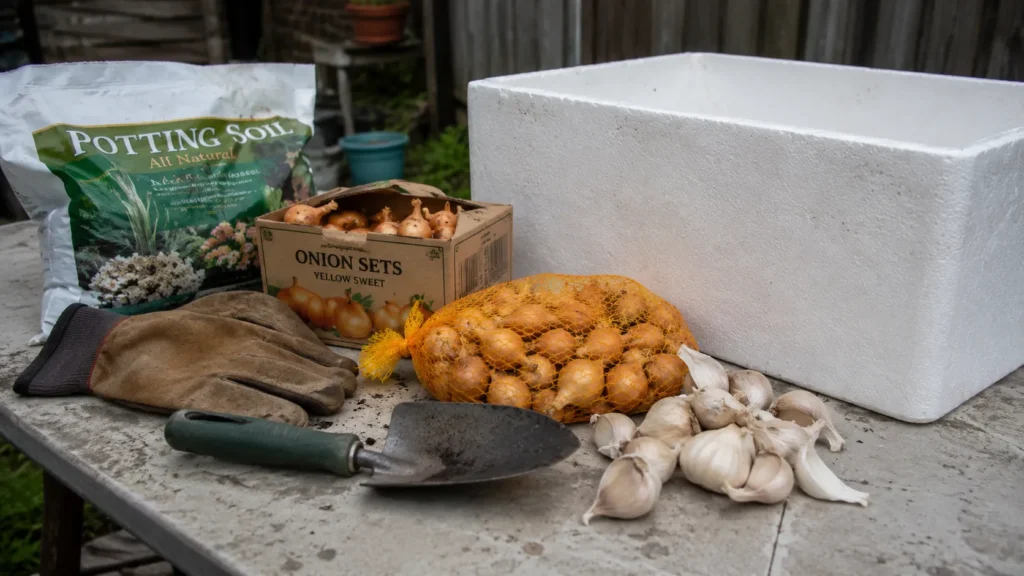
Here’s what I usually gather:
- A deep Styrofoam box
- Potting soil
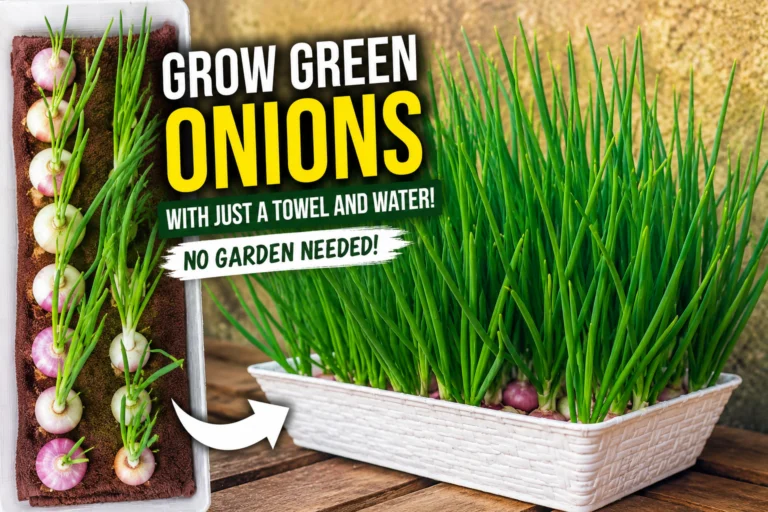
- Onion sets or green onions
- Garlic bulbs
- A small hand shovel
- A drill or knife for drainage holes
- Watering can
- Sunny outdoor spot
That’s really it.
I prefer lightweight vegetable potting soil over heavy backyard dirt. Containers drain differently, and loose soil helps bulbs grow much more evenly.
A Small Backyard Trick
Sometimes I mix a handful of compost into the soil before planting. Nothing complicated. Just enough to give the roots a gentle start.
How to Prepare the Box
This step matters more than people think.
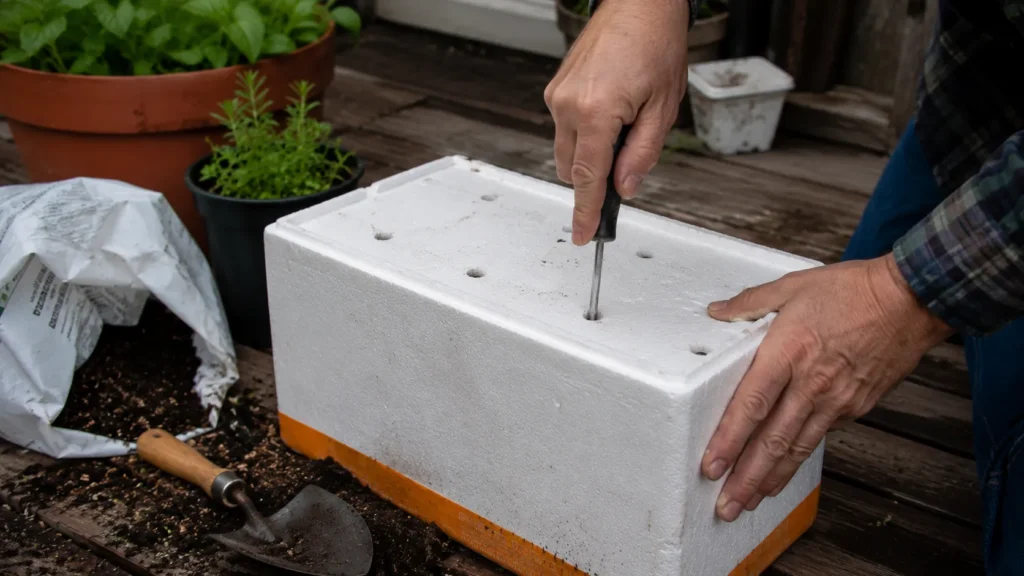
Without drainage holes, the roots can rot surprisingly fast.
I poke several holes across the bottom of the container and a few near the lower sides. They don’t need to look perfect.
After that:
- Add a thin layer of small pebbles or bark pieces
- Fill the box with potting soil
- Leave a little space at the top for watering
The soil should feel soft and airy, not compacted.
One Thing I Learned the Hard Way
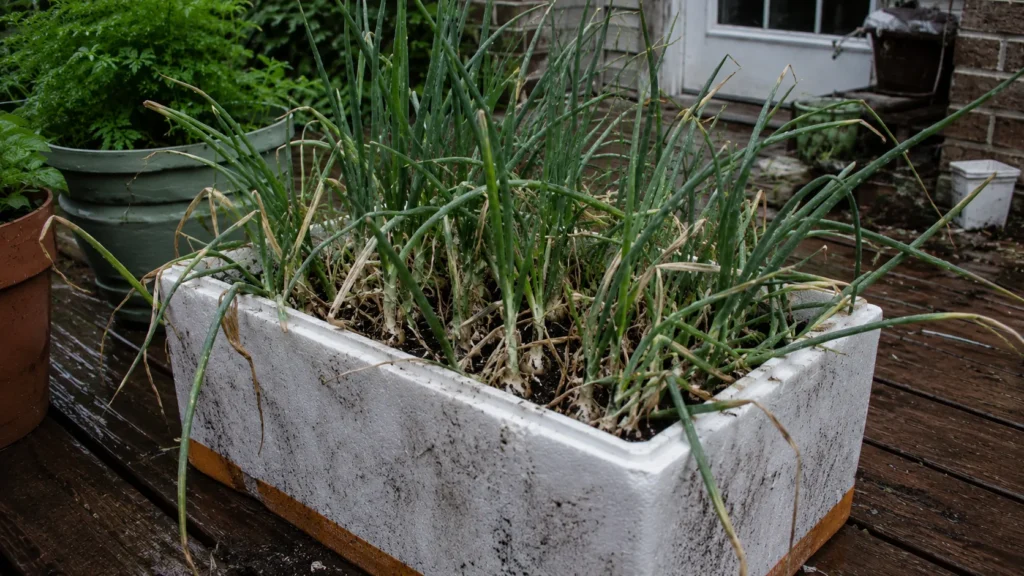
Styrofoam holds moisture longer than clay pots. When I first started, I definitely overwatered mine.
Planting Onions Step by Step
Onions are one of the easiest vegetables for beginners.
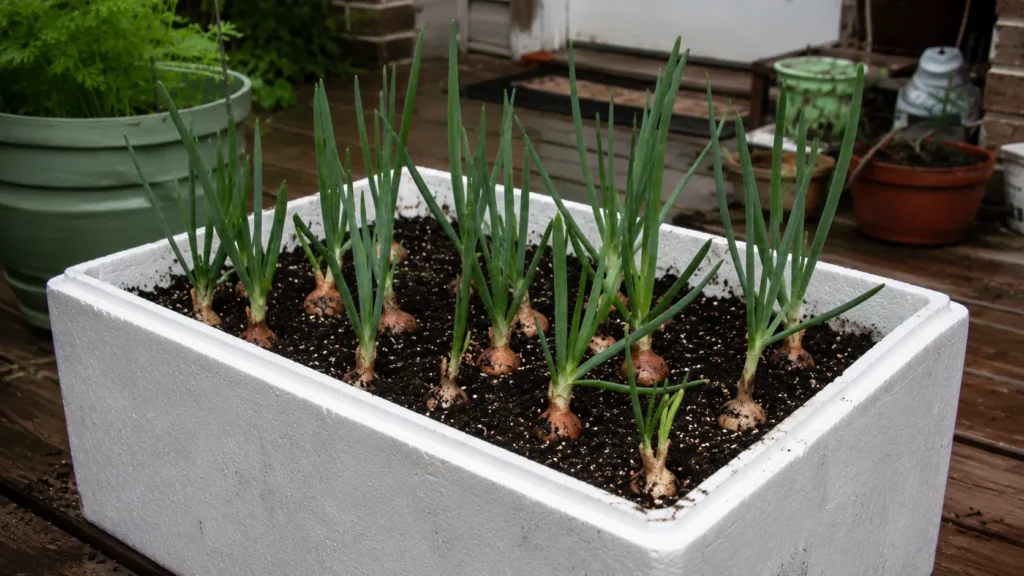
I usually plant onion sets about:
- 2 inches deep
- 4 inches apart
Then I gently press the soil around them and water lightly.
Within days, tiny green shoots start appearing, which honestly feels very rewarding when you’re new to gardening.
Sunlight Matters
Onions love sunshine.
Try to give them at least 6 hours of direct light daily. A sunny patio or backyard corner works perfectly.
Don’t Crowd Them
It’s tempting to squeeze in more plants, especially in small containers. But giving onions space helps them grow fuller bulbs later on.
How to Grow Garlic in Containers
Garlic is wonderfully low-maintenance.
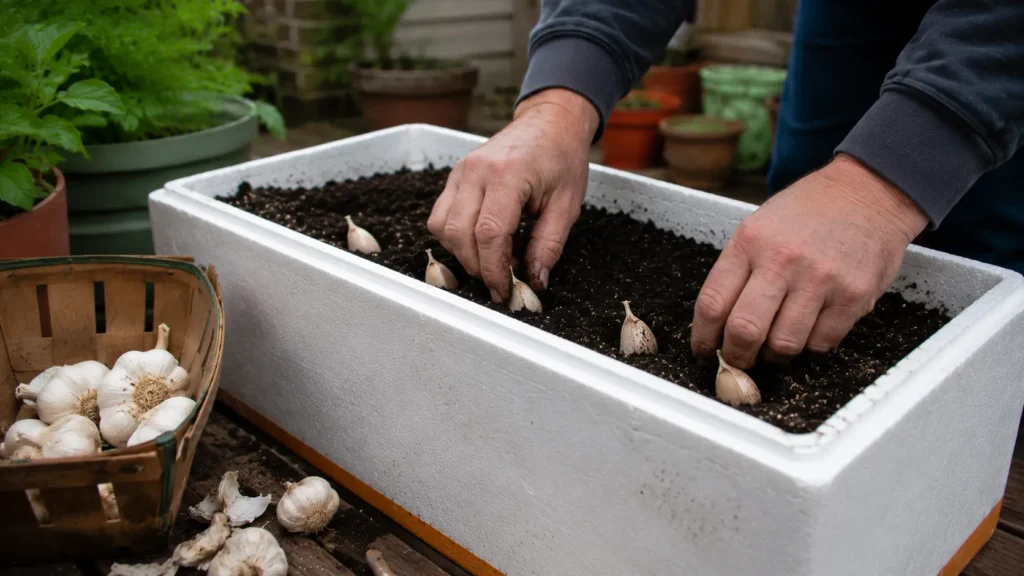
Separate the cloves gently but leave the papery skin intact.
Plant each clove:
- pointy side up
- about 2 inches deep
- a few inches apart
Then mostly leave them alone.
Garlic tends to grow quietly in the background while the rest of the garden changes around it.
Sophia’s Observation
Every year, my garlic starts slowly and makes me think nothing is happening. Then suddenly one morning, the leaves are tall and beautiful.
It’s one of the calmest plants to grow.
Common Beginner Mistakes
Overwatering
This is probably the biggest issue.
If the soil stays soggy, bulbs can rot before they properly develop.
Not Enough Sunlight
Weak sunlight usually leads to thin plants and smaller harvests.
Planting Too Close Together
Crowded bulbs compete for nutrients and space.
A little breathing room really helps.
Forgetting About Drainage
Even a few missing holes can make a huge difference after heavy rain.
Simple Tips for a Better Harvest
A few small habits can noticeably improve your harvest.
Add Light Mulch
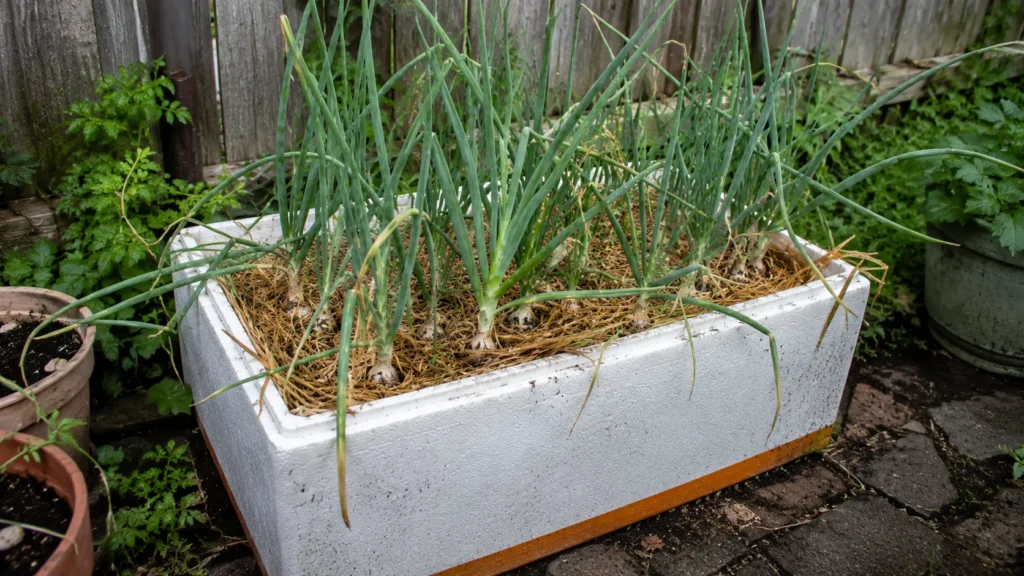
Dry leaves or straw help the soil stay cooler and evenly moist.
Rotate the Container
I rotate my boxes every week or two so all sides get balanced sunlight.
Feed Gently
A mild organic fertilizer once a month is usually enough.
And honestly, onions and garlic tend to grow better when you don’t fuss over them constantly.
Harvesting and Storing Garlic and Onions
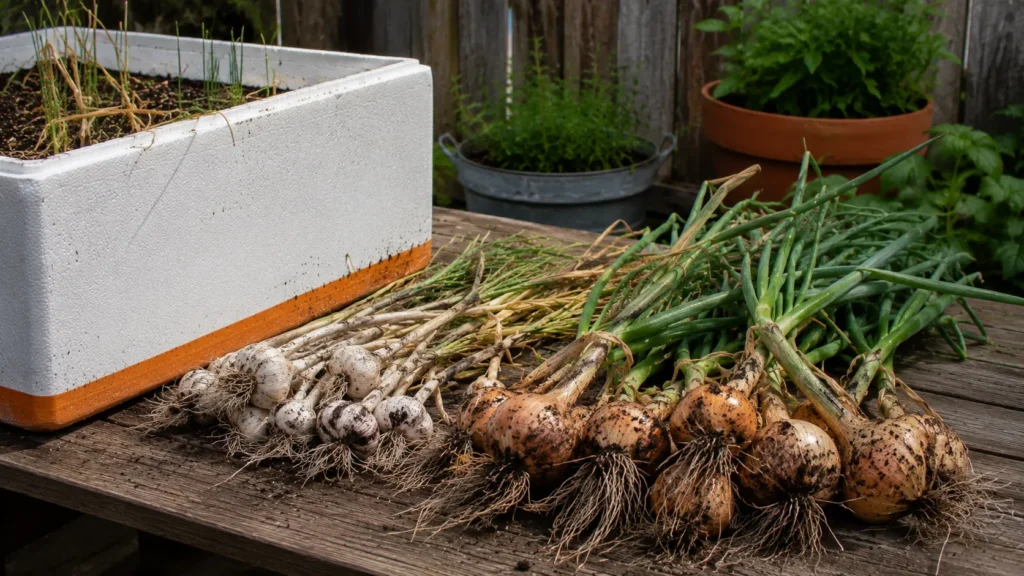
When the tops start turning yellow and falling over, harvest time is usually close.
I like to leave the bulbs drying outside for a day or two before bringing them in.
Then I store them in:
- wire baskets
- wooden crates
- or loosely hanging in the garage
Homegrown garlic smells completely different from store-bought garlic. Richer, sharper, fresher.
It’s one of those little gardening rewards that never gets old.
FAQ
Can I grow onions and garlic together in the same box?
Yes. They grow very well together and need similar care.
How deep should the Styrofoam container be?
At least 8–10 inches deep works best for healthy bulb development.
Do Styrofoam boxes crack outdoors?
Eventually they can wear down from weather exposure, but most last at least a full growing season.
Can I grow them on a balcony?
Absolutely. As long as the area gets enough sunlight, container garlic and onions do very well.
How often should I water?
Usually when the top inch of soil feels dry. Avoid constantly wet soil.
About Sophia
Sophia is the gardener and writer behind Sophia Grows, where she shares relaxed backyard gardening ideas, seasonal flowers, container gardening inspiration, and cozy outdoor living tips for everyday homes. Her style leans practical, natural, and beautifully imperfect.